School Faculty of Art, Music and and Design, University of Bergen | Course Social Design | Course responsible Ingrid Rundberg | Role Illustrator, writer, researcher | Tools and methods Literature study, user feedback and informal observation | Project length Six weeks
Project summary and concept
Based on literature study and personal anecdotal experience (as a father of two), I found there is a general lack of children’s books that (1) depict local animals in their natural habitat; (2) are written in a way that accommodates young children (age 2–3) with advanced language development; and (3) depict serious issues like immigration in a playful, easy-to-understand manner.
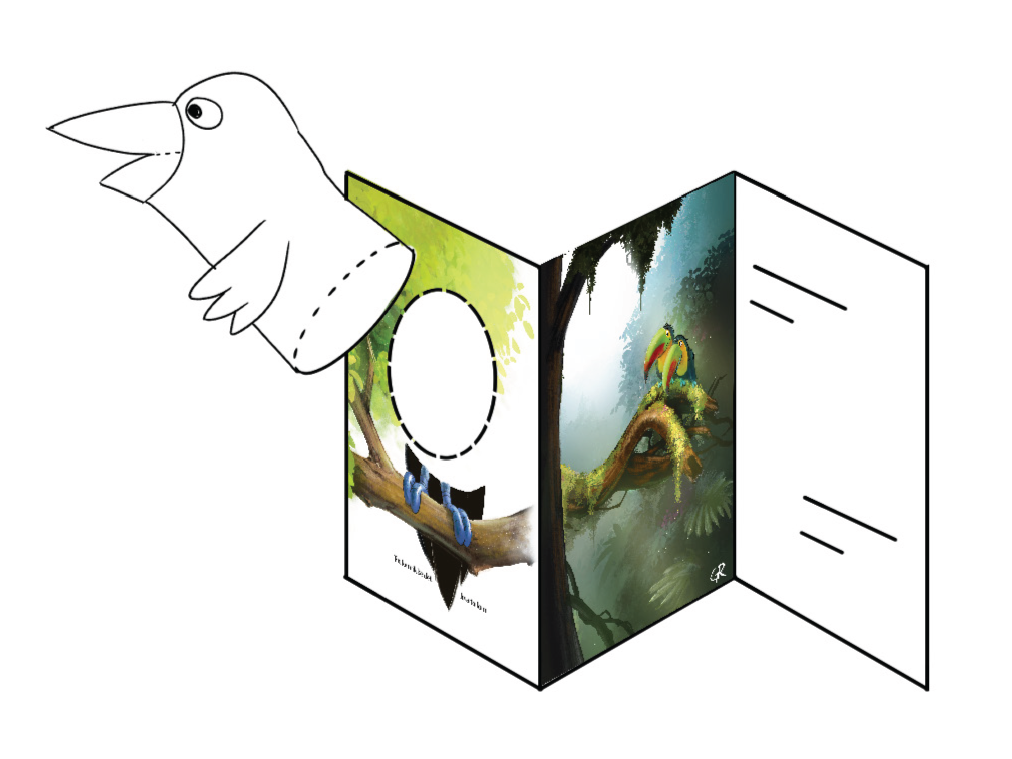
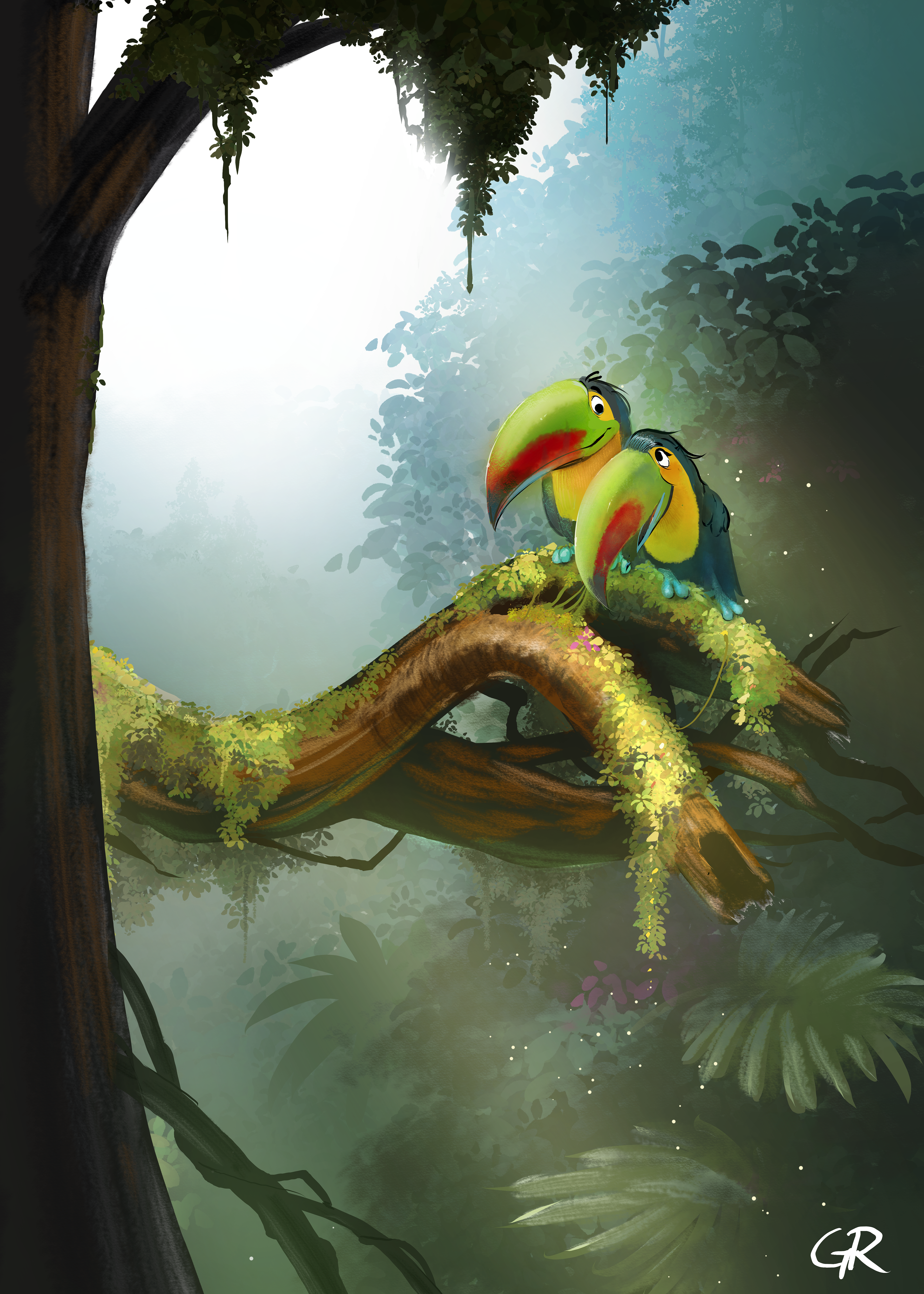
To address the mentioned lacks, I set out to create a puppet play book with simple rhymes about an exotic migratory bird—a toucan, to be exact—that finds itself in Norway, where it meets and helps exotic animals in need—hence the book’s title. (It works better if you read it out loud.) The driving idea behind it was to foster in both young children and parents a sense of mutual benefit and cooperation.
Process
Throughout the project, I had informal and exploratory talks with stakeholders and multiple experts in order to find out what appeals to young children and what works in a kindergarten classroom. Based on these, I did some sketching, drawing and writing—and lots of iteration after feedback. Ultimately, this resulted in a dummy that was tested and evaluated—and enjoyed!—by the children and the kindergarten staff at Seljedalen barnehage.
Tactile experience
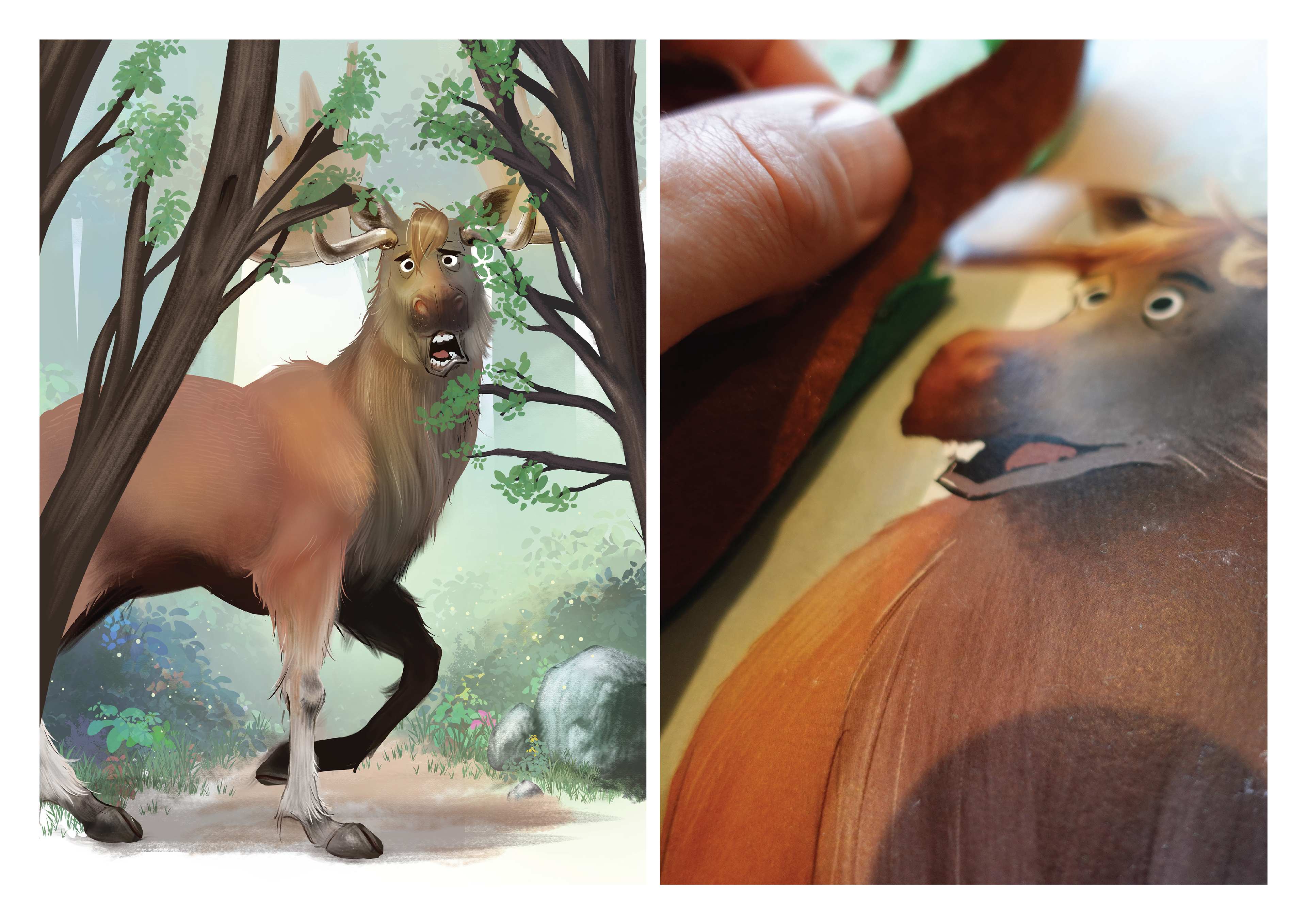
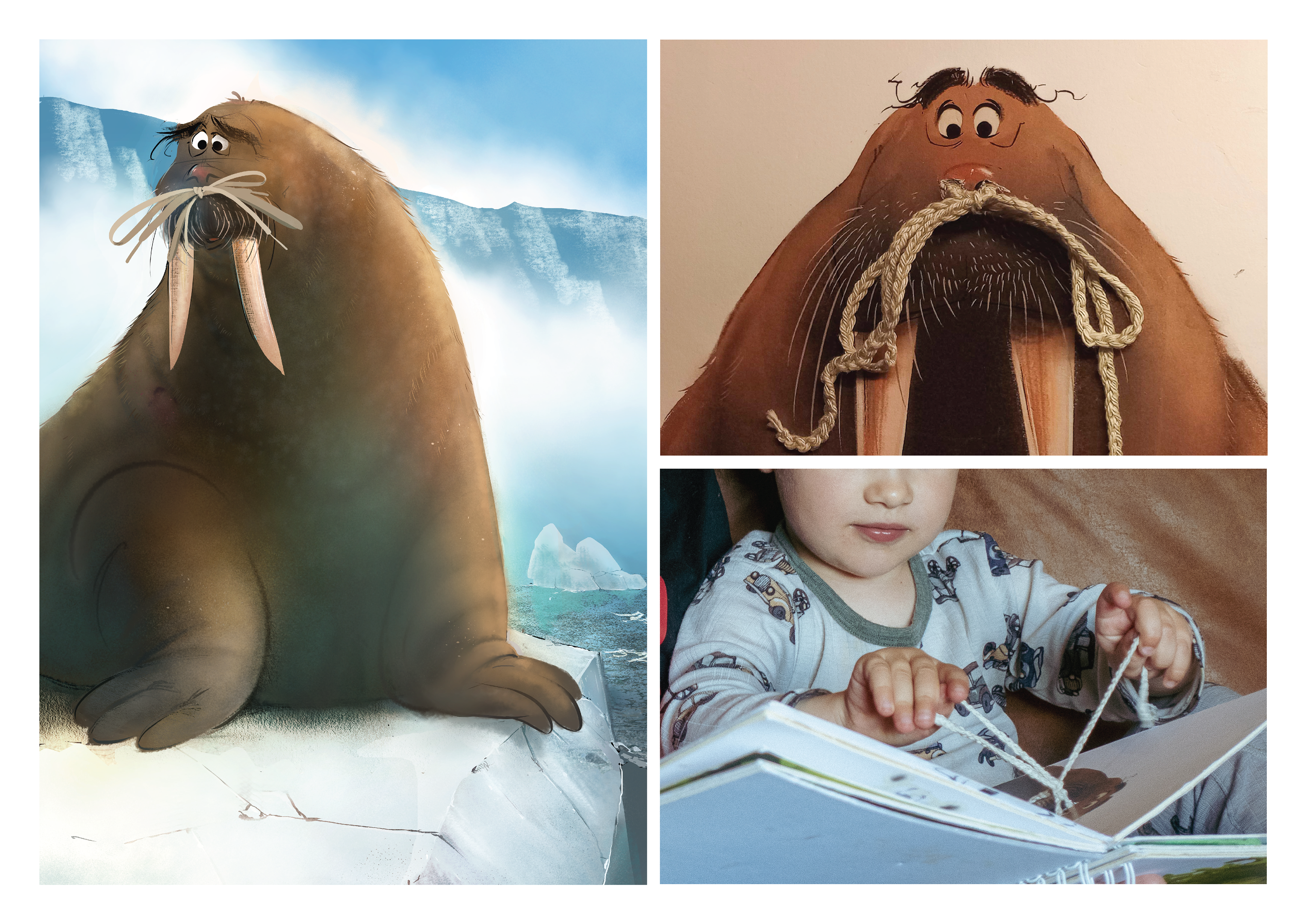
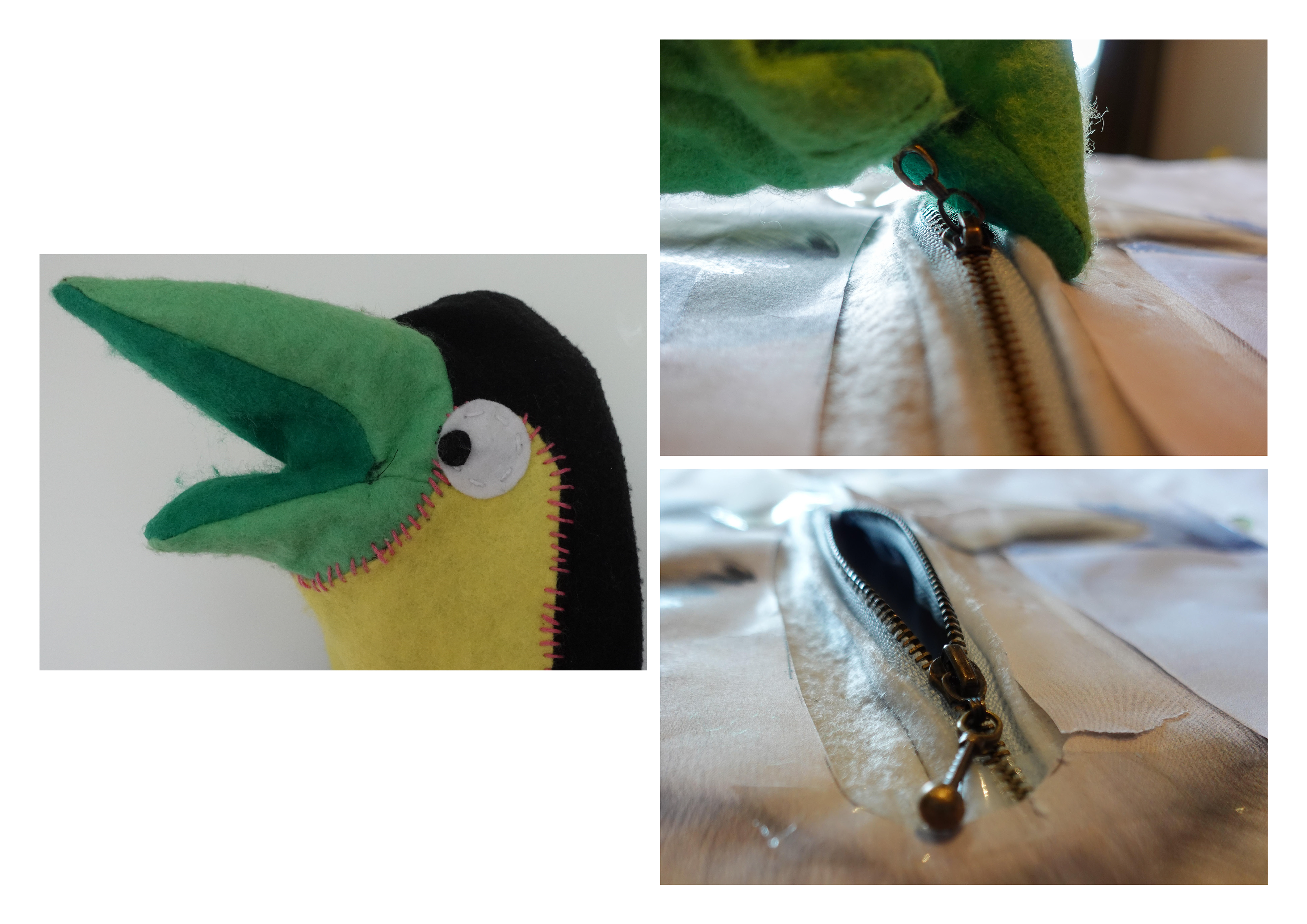
The book offers a tactile experience for the child. For example, the child can lift a flap to get rid of some branches and leaves so the elk can continue on his merry way. The child can untie the walrus's whiskers. They can also unzip the polar bear’s coat so it can cool down. Furthermore, the idea behind the book was that the hand puppet could interact with the page’s elements. And, well, it works!